"The book I'm looking for,' says the blurred figure, who holds out a volume similar to yours, 'is the one that gives the sense of the world after the end of the world, the sense that the world is the end of everything that there is in the world, that the only thing there is in the world is the end of the world."
- Italo Calvino, If on a winter's night a traveler

Friday, January 3, 2014

2013 Reading


I read 34 books in 2013. They added up to 6989 pages of text and 129 hours and 3 minutes of audio. One book every 10.74 days. Nineteen pages and 21 minutes of book per day. Most of the books were written by women. Almost all were written within the last 20 years. I read slightly more fiction than non-fiction, and almost no poetry. I got an Audible account in 2013, so I also listened to big handful of audiobooks.

In 2012, I read 36 books. But none of them was Infinite Jest, so I'll still chalk up this year as an improvement.

More importantly, of those 36 books from 2012, 29 (81%) were written by men. Noticing that, I promised myself I would be more mindful of the gender of the authors whose books I read. Success!

The best book I read this year was Independence Day by Richard Ford.

So long 2013.


(Books by decade. Click to enlarge.)


Friday, November 29, 2013

Independence Day by Richard Ford


My guess is that Real Estate has some strong (if also mixed) significance to a lot of Americans, particularly those around my age, who grew up roughly concurrent with the housing bubble, or those from one of the parts of the country that was changed most by the explosive development.

Both of my parents' have worked at least tangential to the real estate industry. On Sundays, we used to visit model homes just for fun, critiquing the interior design choices and picking out rooms. (I would still enjoy it if my more urban and environmentally-minded partner didn't find tract housing sort of reprehensible.) I'm at a point in my life now where home ownership is, for the first time, a possibility.

So I'm well-poised to find a story about a real-estate agent pretty compelling.

Independence Day is the second in a series of three novels about Frank Bascombe, a one-time sportswriter, now real-estate agent in the fictional Haddam, New Jersey. Frank is divorced, with two children: a troubled teenage son and a younger daughter. Another son died long before the events of this novel. He's divorced, and his wife has remarried, though he lives alone. He's in the middle of what he calls The Existence Period, a sort of float-with-the-tide attitude characterized by a willful avoidance of his own emotional needs.

Over several days leading up to the fourth of July, Frank shows some homes to a couple from Vermont, checks in on a rental property of his own, visits his girlfriend, and then picks up his son for a road trip to the basketball and baseball halls of fame. And that is, basically, the plot.

Suburban middle class white life is a well worn subject of fiction, and it tends to follow a few predictable paths. The first and most obvious is to use the 'burbs as a subject for satire, an object with which to poke fun at our materialism, small-mindedness, cultural sterility, and conformity.

The second is some ways the first's opposite: to treat domesticity as deeply meaningful, and elevate the sorts of everyday activities of most of our lives (cf. Toni Morrison's directive to "mystify the familiar"). I'm sure you know what I'm talking about here--stories where backyard trees will glisten with dew and the wind will billow sheets on the clothesline. Much will be implied.

But Independence Day charts a middle path, and tries to paint everyday life neither larger nor smaller than it actually is. It doesn't denigrate our boring lives, but it also doesn't pretend as though they're more meaningful than they are. This is one of things I found most admirable and also impressive about the book. Frank's life is modest and a little alienated, and the book doesn't treat modesty as a either a sin or a virtue.

It does this on the sentence level. Where another writer might be ironic or poetic, Ford is chatty, almost rambling. Which isn't to say that the writing is plain. The sentences are fabulous. It's maybe overly aphoristic, but the advice and adages are particular to the character, and you get into the rhythm so that it doesn't matter much. Here's a representative sample taken more-or-less at random:

"My own view is that the realty dreads (which is what the Markhams have, pure and simple) originate not in actual house buying, which could just as easily be one of life's most hopeful optional experiences; or even in the fear of losing money, which is not unique to realty; but in the cold, unwelcome, built-in-America realization that we're just like the other shmo, wishing his wishes, lusting his stunted lusts, quaking over his idiot frights and fantasies, all of us popped out from the same unchinkable mold. And as we come nearer the moment of closing--when the deal's sealed and written down in a book in the courthouse--what we sense is that we're being tucked even deeper, more anonymously, into the weave of culture, and it's even less likely we'll make it to Kitzbuhel. What we all want, of course, is all out best options left open as long a possible; we want not to have taken any obvious turns, but also not to have misread the correct turn the way some other boy-o would."

I should just let that stand on its own. But notice not only the content (which seems pretty solid to me), but also how long and careful those sentences are. In his Paris Review interview from around the time Independence Day was published, Ford described his writing like this,

"Sometimes I’ll write a sentence that sets up an opportunity for say, a direct object or predicate adjective and I won’t have a clue what the word is except that I know what I don’t want—the conventional word: the night grew dark. I don’t want dark. I might, though, want a word that has four syllables and a long a sound in it. Maybe it’ll mean dark, or maybe it’ll take a new direction. I’ll have some kind of inchoate metrical model in my mind." 

And I think you can see that approach in the quoted section above. It's careful but also casual and approachable. It stays interesting by introducing variation to the structural level, rather than the word-choice level.

I really like it.

This is an earnest book. It's only occasionally ironic. I can see a few things about Frank that he can't see about himself, but not many. The book and character are good-faith representations.

Towards the very end of the book, Frank begins to move towards permanence. He even predicts an upcoming "Permanence Period" to mirror his Existence Period.

"...that long, stretching-out time when my dreams would have mystery like any ordinary person's; when whatever I do or say, who I marry, how my kids turn out, becomes what the world -- if it makes note at all -- knows of me."

But I don't know if I think he will change much. He's haunted by the death of his son. He still seems to love his ex-wife. His son (the living one), who has plans to come and stay with Frank in Haddam, may shake him out of his ego and funk, if only out of necessity, but who knows.

There is, at least, a third book where I could find out.


Tuesday, August 20, 2013


Winter Morning Walks by Ted Kooser - B+

Zealot: The Life and Times of Jesus of Nazareth by Reza Aslan - C+ 
Aslan's first book is one of my favorite non-fiction works. But the organizing insight here, that the two things we know about the historical Jesus are that he was Jewish and that he was crucified (and therefore executed for political reasons), can't sustain interest for a whole book, and is probably a little stale to a lot of interested readers anyway.

One Thousand and One Nights: A Retelling by Hanan Al-Shaykh - C+
Mythological / fairy-tale / oral-story type writing. Not my style.

Thirst by Mary Oliver - C
Honestly, sometimes I love Oliver to death, but this book was her at her worst, her most cloying and saccharine. Some of these poems were like bad parodies of an Oliver poem. 

Given Sugar, Given Salt by Jane Hirshfield - A

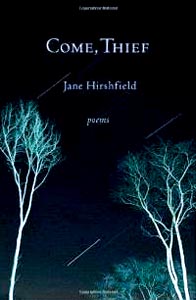
Come, Thief by Jane Hirshfield - A

Close Range: Wyoming Stories by Annie Proulx - B
The more famous stories in this collection (Half Skinned Steer and The Mud Below) didn't impress me too much, and I was really disappointed by Brokeback Mountain, the movie version of which is probably in my top 15. But even those three were solid enough, and some of the others--A Lonely Coast, in particular--were great.

Tampa by Alissa Nutting - B-
Super gross, but very readable.

Seating Arrangements by Maggie Shipstead - A-

Buddhism Without Beliefs by Stephen Bachelor - B+
The content in this book is too life changing. He does an admirable job of translating the Eastern jargon and claptrap of Buddhism for a secular, Western audience, making a case for ejecting the supernatural elements of the religion and embracing the Dharma practice alone. But the practice is too real and scary and hard soooo...

The Undertaking by Thomas Lynch - A
Second time reading this. Still great! 


Monday, July 8, 2013

Infinite Jest by David Foster Wallace


Infinite Jest by David Foster Wallace

It's not easy to separate a thing from its hype, from its physical and cultural packaging. Pour cheap wine into a fancy bottle and slap on a hefty price tag? Sommeliers swoon. Switch the labels on Pepsi and Coke? Even experts can't tell the difference. Tell an art critic that some scribbles by an orangutan are the work of an up-and-coming abstract painter? She'll praise the sophistication of the line work.

The above makes some people uneasy. They think it means that we're all shallow liars, eager to impress or fit in. But to me it only means that our sensory and aesthetic experiences are more broad than we imagine. We are actually tasting the label on a bottle of wine and the story of its cultivation as much as we are tasting its ingredients. When we drink a Coca-Cola, part of that taste--not just the experience of drinking it, but also the actual taste--comes from a hundred years of advertising and Americana.  Our appreciation of a work of art is informed by the story of Art, and the story of particular artists.

Which is all to say that it's hard to know when this book, which is sometimes too long and occasionally kind of a mess, is genuinely great, and when as a reader I'm only sort of projecting greatness onto it through the filter of its (and its author's) cultural status.

Well, who cares? "Authenticity" is a red herring. There are no bad reasons for enjoying something. And I really, really enjoyed this book. As in, really really. As in, reference-to-the-title-of-this-blog enjoyed it.

The plot of the novel, so much as it has one, is made up of three largely separate threads:
  1. The Enfield Tennis Academy, an ultra-elite school/camp that prepares tennis prodigies for The Show (professional play). ETA was founded by James O. Incandenza, ex-optics-expert-and-avant-garde-filmmaker whose children, esp the middle child Hal, constitute the narrative focus of these sections. 
  2. The Ennet House Drug and Alcohol Recovery House, a halfway house in Boston. The newly-recovering live-in staff-member Don Gately and the veiled Joelle van Dyne anchor these sections. 
  3. Les Assassins des Fauteuils Rollents, a wheel-chaired Quebecois separatist/terrorist group, who are searching for a copy of Infinite Jest (aka "The Entertainment," or the samidzat), a fatal art film by J.O. Incandenza which is so entertaining that it turns viewers brains to a kind of mush as they watch it repeatedly to the exclusion of other activities. 
Chronology is divided into "Subsidized Time," which is exactly what it sounds like (e.g., The Year of the Whopper, The Year of the Trial-Sized Dove Bar, etc), and seems to me mostly a clever way for DFW to keep the story feeling both vaguely contemporary and a-historical.

The events take place in a combined superstate of America, Mexico and Canada called the Organization of North American Nations, or O.N.A.N. While reading, I wrote off the name as a gag, and a sort of childish one, but now I'm realizing that it may be more important than I had noticed from the weeds, that there is something masturbatory not just about the at-least-semi-self-indulgent book itself, but also about the characters, who are moved by strong emotional forces that simulate connection but who are ultimately isolated, and about the world too, which is built on a foundation of pleasure and rote style without substance.

The book is big. 1079 pages. Tall and extremely dense pages. Paragraphs and even sentences that go on for pages without break. Medical, mechanical, mathematical jargon. 92 pages of endnotes, some of which are as long as a serious short story.

And its difficult. Or difficult-ish, anyway.

Reading IJ is like training for a marathon; its a lifestyle choice. And some significant part of the experience is contained in its size and in its difficulty. While it would probably be fairly easy to curate the course of a marathon to include only the best and most beautiful and most interesting stretches, doing so kind of defeats the purpose. You want not only to run the marathon, you want to have run it, you want to be a person who is capable of running it. IJ is like that at least a little bit. Part of the reason people read this book is to prove to themselves that they could, and to become the kind of person who has read it.

But so, the content.

It's a book about addiction and recovery, as you would guess. It's a book about entertainment, and parents and their children, and greatness and mediocrity. It's about the things to which we devote ourselves. And in a big way it's about loneliness. Not just because so many characters are depressed, attempt or commit (or just imagine) suicide. There's something lonely about its zany structure, too. It's a book about existing in a busy, exciting, at times overwhelming sensory experience, surrounded by the sounds and images of people, and feeling alone. And though the stories are intertwined in lateral, out-of-the-corner-of-your-eye ways, and though they gain momentum in the final third and seem to be moving towards a convergence... they never actually meet in the middle. The book ends abruptly, a blank spot on the map where the roads ought to make an intersection.

Something else worth saying about its structure: for all its gimmicks and winking, the book is actually fairly friendly for long stretches at a time. Most of the times when I found myself frustrated and ready to skim, a new section would begin that I couldn't help but read. And the best sections of this book are some of the best literature I've ever read, full stop. Perfectly crafted on the sentence-level and dripping with charity and understanding towards others.

I'll read this again, 4 sure.
 
I don't know if it's worth saying anything about the Writer. The autobiographical elements of the novel are all over the place (drug addiction, tennis, etymology, genius, depression, suicide). But its hard to know where the appropriate or helpful line is there. So, let's do two things. First, it's worth mentioning the Writer if just in regards to the creation of the thing, how impressive it is, not just for its size but also for its power and vivacity and ambition. There's no understating the energy and time and obsession and love required to make a thing like this. It's humbling and inspiring and sort of gives you a good feeling about what humans can do in the way that only serious art and lit can.

Second, here's a line from a poem Mary Karr,--memoirist, poet, and one-time-girlfriend of DFW--wrote a year after his suicide:
"I just wanted to say ha-ha, despite
           your best efforts you are every second
alive in a hard-gnawing way for all who breathed you deeply in,
     each set of lungs, those rosy implanted wings, pink balloons.
          We sigh you out into air and watch you rise like rain."


-------
Also: I like making graphs, so here's a little behind-the-scenes magic for the superfans.


Tuesday, June 25, 2013

Non-Fiction Auiobooks

Since I last updated, I've been making my way slowly through something big. I think I should be done in the next month or so, and will have a long update then.

In the meantime, I've been listening to some nonfiction audiobooks. All three are about, in some way, infiltrating private groups of passionate people. My thoughts:


Going Clear: Scientology, Hollywood, and the Prison of Belief by Lawrence Wright

There's something inherently interesting about liminal belief systems, those groups in the fuzzy border between cultural status as a "cult" and as an established "religion." It's part of the reason for all my fascination with Mormonism. After all, even the mountains of our religious landscape today must have begun more modestly, and who's to say that some weird contemporary niche group won't take hold and resonate more broadly going forward? Most religious practices and histories can sounds strange to outsiders.

All that said, Scientology is bonkers.

I went into this without much knowledge about the organization outside of that South Park sketch, but basically expecting to leave with some sympathy for it. That's what usually happens when you get to know something better. Not so here, not even with Wright's even-handed approach. There's just no way out of the fact that Scientology as an organization is abusive, myopic, aggressive, and greedy, that L. Ron Hubbard was a conman and David Miscavage is borderline psychopath.

Very great book, though!


The Nine: Inside the Secret World of the Supreme Court by Jeffrey Toobin

The rarefied and secretive culture of Supreme Court, not to mention its proximity to and influence on our lives, makes for a good book subject. And Jeffrey Toobin is a perfect non-fiction writer: clear, entertaining, brief. I've gone to his New Yorker summaries every time the Supreme Court has done anything newsworthy over the last couple years.

This book is a history of the Court in very recent history, going back only 30 years or so. It chronicles the changes in the court, mostly making a case that its become increasingly partisan, and even more particularly increasingly conservative. He was, himself, more partisan than I had expected, and it took me a while to get used to it. But once you settle into his perspective, the book is incredibly readable.

The profiles of the individual judges alone are worth the effort.

I'm not sure how much of a better understanding I have of the political machinations behind the Court's appointments, but I have a better sense of the chronology. And I have a favorite Justice!


The Orchid Thief by Susan Orlean

What a beautiful little book, almost ruined by a terrible audio book narrator.The author follows one particular Orchid enthusiast in south Florida who is on trial for stealing plant material from protected swampland, and uses his story as a anchor onto which she ties chapters about the history of orchid cultivation and crime, the biology of the plants, the story of the region's ingenious peoples,  etc etc. It's a story about passion and obsession, and the narrator commits the only cardinal sin in literature: she is arch and judgmental and condescends towards her subjects.

It's a real shame, because the words don't seem to really be written this way. They're great words! I remember in particular, Susan Orlean described the air around the swamp as thick and drapey like wet velvet curtains. What a baller metaphor! It's not a joke or a complaint, just a good sensory description. But the narrator hams up her delivery like a community theater actor describing having eaten a bug. "The air was THICK and DRAPEY like WET VELVET. BLEECH!" She didn't really say "bleech," but still.

Tuesday, April 23, 2013

Annoyed But Still Pretty Positive Book Reviews


The first half of this memoir about being cyber-harassed is terrifying and unputdownable. Then it gets boring. Lasdun is a professional fiction writer, and he writes like someone who knows his way around a sentence. Which... is just not super helpful for a tense thriller about feeling unsafe and helpless? And then at the end he takes a trip to Israel?


I love me some Agatha Christie. This is a good one. What is there to say? You know if you want to read this kind of book. I give it Four Agathas up out of five.


Super-great feminist sci-fi. If I hadn't gone to a very religious middle school I would've half-read it like ten years ago for class and never even appreciated how very good it is.


Strout wrote one of my all-time favorite books, Olive Kitteridge. This book is about two brothers who are lawyers from Maine, and their sad nephew accidentally commits a hate crime against Somali immigrants during Ramadan. It's not as good as Kitteridge, but that's just because it's a novel (whereas Kitteridge was a series of connected stories), and all novels are sloppy and imperfect compared to short stories. But it's still very, very good, and its pretty cool that Strout tackled subject matter that was probably outside her comfort zone.


What a weird book! A sort of morality tale slash coming of age story slash lives of the rich and famous episode. Some people like this better that The Great Gatsby, which is... I mean, who cares obviously, and this book is fine, but it's also kind of all over the place. It feels like an artifact to me, more than anything else. It feels like it's not for me.

Monday, April 1, 2013

Far From The Tree


Far From the Tree: Parents, Children, and the Search for Identity by Andrew Solomon

"Having always imagined myself in a fairly slim minority, I suddenly saw that I was in a vast company. Difference unites us. While each of [the experiences described in the book] can isolate those who are affected, together they compose an aggregate of millions whose struggles connect them profoundly. The exceptional is ubiquitous; to be entirely typical is the rare and lonely state."


In Far From The Tree, Andrew Solomon introduces the  concept of "horizontal" identities. These are differentiated from "vertical" identities, or those elements of your identity that you share with your parents, such as being black or having a propensity towards sports or music. A horizontal identity is one that you don't share with your parents, but which you do share with peers, such as being gay. Where vertical identities are encouraged and reinforced, horizontal identities are often resisted, and can cause pain, difficulty and shame for parents and children both.

Solomon is a gay man. In what began as an attempt to understand his parents' experience, he spent 10 years researching and interviewing for this book about the tough business of parenting children who are unlike you. His goal is general exploration, but he often also has a more particular agenda: to shift his and the readers' conversation around certain circumstances from disability or disadvantage to identity politics. He focuses on nine kinds of children: those who are deaf, those who have down's syndrome, autism, or other disabilities, those who are prodigies, schizophrenics, criminals, transgender, or are born of rape.


The YouTube videos embedded are of particular subjects of the book, or Solomon's own thoughts about its themes. I think they're worth watching.

Although he's currently a PhD Candidate in Psychology, Solomon admits early on: "I have relied primarily on anecdotes, because numbers imply trends, while stories acknowledge chaos." In this way, this is almost the inverse of a science book, in which trends and statistics tell a story flavored by occasional personal anecdotes. Solomon instead relies on personal stories to make up the bulk of his (very bulky!) book, and these are only peppered with the occasional statistic or explanatory study.

For this reason, I was afraid the book would be my nightmare: a long parade of cherry-picked stories and quotes meant to present a unified, celebratory experience of finding meaning in difficulty. But Solomon was obviously committed to representing the full breadth of experiences within each topic, and the result reveals the full humanity of his subjects.

That is, we see that deaf people are not just one way, are not a bloc or type. They don't have just one feeling about their deafness or about deaf culture. They are people. Their experience is as variable as any non-deaf person. This is obvious in the abstract, but I don't know how real it feels to us most of the time, and reading about that variability is illuminating.


The book is about so many things. It's a sad book, obviously. The chapters about schizophrenia and rape are almost unreadably sad. It's also--and also obviously--about the meaning and strength that can come from adversity and sadness. It's about parents generally, but mothers in particular, as caregivers and activists and amateur scientists. It’s a book about illness, stigma, and identity.

It’s a book about politics, but it’s not a political book exactly. It’s too personal for that kind of attribution. Abortion is a popular topic, as genetic testing allows parents to abort fetuses who would otherwise have down’s syndrome or dwarfism. Peter Singer’s work is referenced often.  It just touches these kinds of things lightly.

Mostly it’s a book about empathy. It’s dense with the stuff. It challenges the reader to confront the boundaries of  her empathy and then holds her hand as she moves forward from there.


On a personal note, the chapter that was most revelatory to me was the one that focused on transgender individuals. I've never known a transgender person. And although I'm a male with a pretty strong helping of traditionally feminine qualities that I really like about myself, it's hard for me to imagine the desire to actually, physically be another gender. Like any good liberal, I've fully supported the rights of people to do whatever they like without harming someone else, but the shameful truth is that I've found transgenderism as an idea... kind of icky and sort of indulgent. But the heart-breaking, human stories of young men and women struggling with their gender included in this book are a strong antidote for that kind of resistance.


One of the best non-fiction books I’ve read in a long time.

"Children with horizontal identities alter your self painfully; they also illuminate it. They are receptacles for rage and joy — even for salvation. When we love them, we achieve above all else the rapture of privileging what exists over what we have merely imagined."